


Traditional Tattoo highlight...

In this series of articles, I will be describing some of my favourite tattoo styles, why I like them specifically and a little bit of the history and cultural influence of the style.
Style Highlight – Traditional
I feel it would be a disservice to all of Tattoo history to not start off this series with the Traditional style.
Traditional tattoos are usually characterised by thick, bold lines, a limited colour palette, as well as simple imagery. Traditionally, it usually has non-complex shading which can give it a 2D appearance.
Tattooing as whole has a massively deep and complex history, with roots in so many cultures and so many countries including Egypt, Polynesia and Asia. But I will get into this another time.
Traditional tattoos are thought to have been spread from sailor cultures. During the 19th and 20th centuries, they adapted Polynesian tattoo traditions into bold lines and used nautical imagery. The word ‘Tattoo’ comes from the Tahitian word ‘Tatau’.
Sailors would use tattooing to pass time, as well as a form of self-expression and protection. They would tattoo things like anchors, ships and swallows as well as mermaids and other nautical motifs.
Now, everybody and their aunt knows who Sailor Jerry (Norman Collins) is, he has his own rum for goodness sake.
I thought I would stay close to home and stick with some British tattooing legends.
First, George ‘King of Tattooists’ Burchett. Born in 1872 in Brighton (I had a tattoo there at The Jolly Devil 2 weeks ago 😊) He was expelled from school when he was young because he was caught tattooing his classmates.

He joined the Royal Navy after that at the age of 13, and that is where he developed his skills. After leaving the Navy he became a full-time tattoo artist and was said to have been favoured by the wealthy upper class and some European royalty (ye old tattoo influencer).

Although his style started in the Navy, it didn't just consist of Sailor’s motifs. His work included African, Japanese and Southeast Asian traditional iconography. He is even responsible for pioneering ‘Cosmetic tattoos’ in the 1930s when he permanently darkened women’s eyebrows with tattoos.
Another British tattoo legend is Jessie Knight. Born in Croydon, the daughter of a sailor, who taught her how to tattoo, she was Britain’s first professional female Tattoo artist. Knight began to tattoo in 1921 in Wales, by the age of 18 she was tattooing clients, and occasionally bartered with clients who couldn't pay. It is said that she once tattooed someone for a gun which she shot her violent and abusive husband with, injuring him in the process (legend!).

Knight opened her own tattoo shop in Portsmouth where most of her clients were women. She later returned to Wales and continued to tattoo there well into the 1980s.
Knights style was heavily influenced by the traditional tattoos of the sea, although her designs were naturally more feminine as a large portion of her clientele was female.
Knight also enjoyed the art of freestyle tattoos, drawing straight onto her client's skin instead of using a stencil.
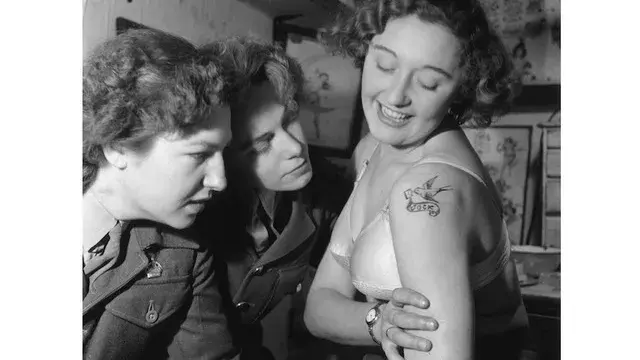
I wanted to tell you about Knight as, looking at her history can also tell us a lot about the cultural norms in tattooing at the time. She is recognised as the first female tattooer, and it’s estimated that there were only around five others in both the US and Europe at the time. Tattooing was incredibly tough for women at the time; her shops were broken into and her designs taken (why she preferred freehand).

This again is a story for another day, but I will be returning to her story in more depth.
Let's investigate machines now, believe it or not the history of the coil machine begins with Thomas Edison (yes he technically holds the patent for the coil machine with his ‘electric pen’). This was then adapted in 1890 by Samuel O’Reilly. George Burchett then made subsequent developments to the machine which made them lighter and added a way of plugging them into wall outlets instead of using batteries (oh how the tables turn).
While this is recognised as how the coil machine got its start, there are other stories. For example, Tom Riley patented a single-coil machine which was based on a doorbell assembly just 2 days after O’Reilly.
Coil machines are still used today; my coils haven't seen much use recently, but my tuned and modified shader and liner are on a shelf at the shop.
Artists who prefer power and speed over the convenience of modern rotary machines and their cartridge systems still use coils, and I for one do miss the noise of my friend Conor’s coil screaming in my ear while I worked at my previous shop.

The tattoo industry owes a lot to the traditional tattoo style, I could go into so much more detail about inks, homemade needle bars and graphite stencils as opposed to carbon, but this article was supposed to be somewhat brief.
If you want me to go more in depth with any of the topics I have shoe-horned into this article, let me know!
I personally adore this style, not only do I feel like I’m respecting and honouring those who came before me, but I also feel connected to the industry that I love so much.
I love a bold, thick line and I have adapted my personal traditional style with more line weights (there would traditionally only have been 1 or 2) and more vibrant colours as well as my favourite type of shading, pepper shading.
Although traditional tattooing has evolved so much in the past 200 years with Neo-traditional tattoos and other interpretations of the traditional style. We will continue to use this staple style in terms of both technique and culture. Traditional tattoos will never die and ‘Bold will Hold!’
Here are some tattoos I have done that could be considered ‘Traditional’ followed by some of my personal trad style where I use bold lines as well as a much thinner contrasting line. I usually like to shade these pieces in a pepper shading style.
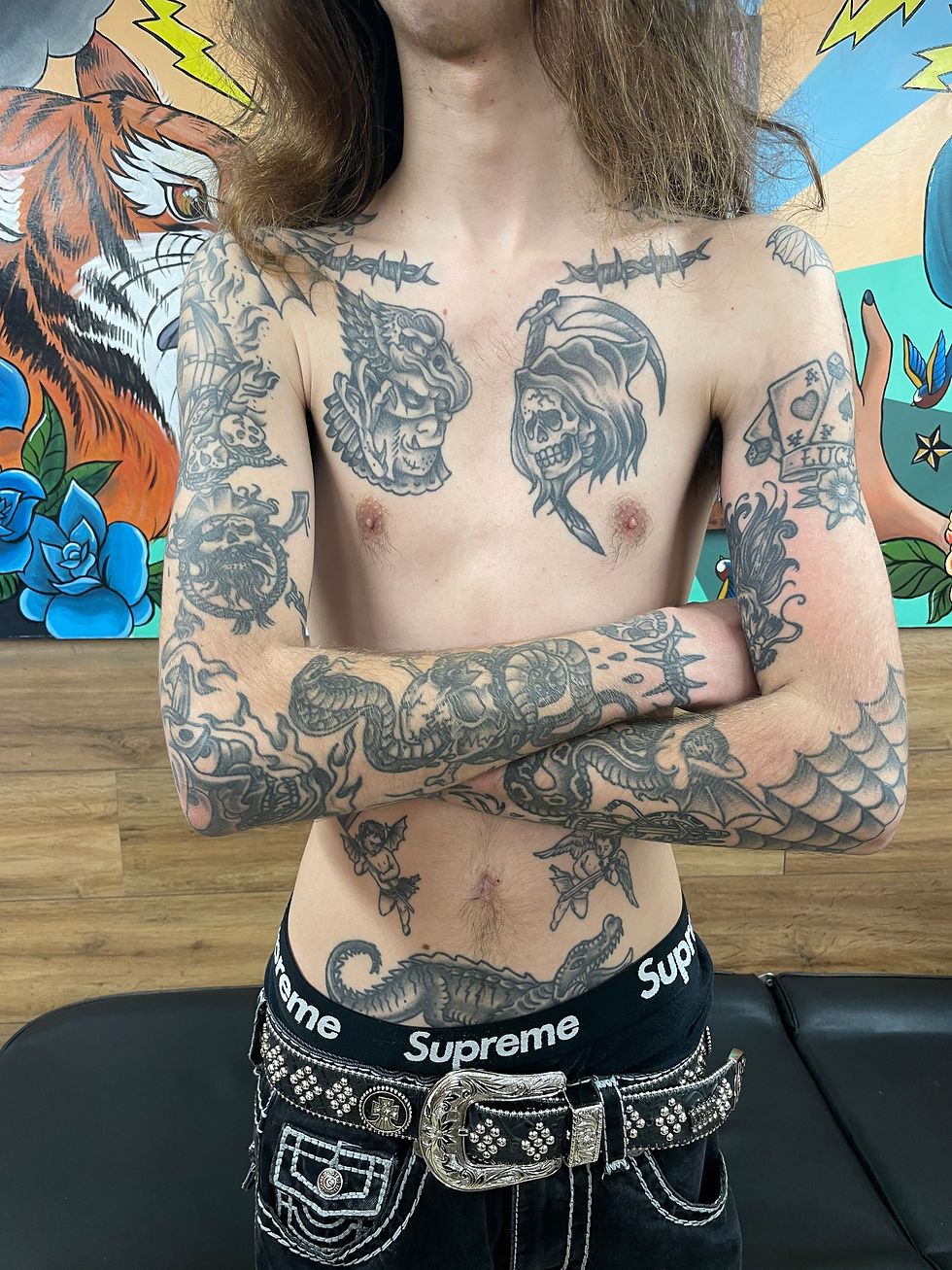
All of the tattoos here that you can see were done by me. There is quite a few common Traditional tattoo motifs here, for example, playing cards, the grim reaper and clipper ships.

The same client's arm, this photo shows a spider web elbow which, although it has lost its original meaning to time, it is still a common modern traditional tattoo.

Another modern take on a traditional classic, the eye. This tattoo has a lot of meanings and can mean lots of different things to different people.
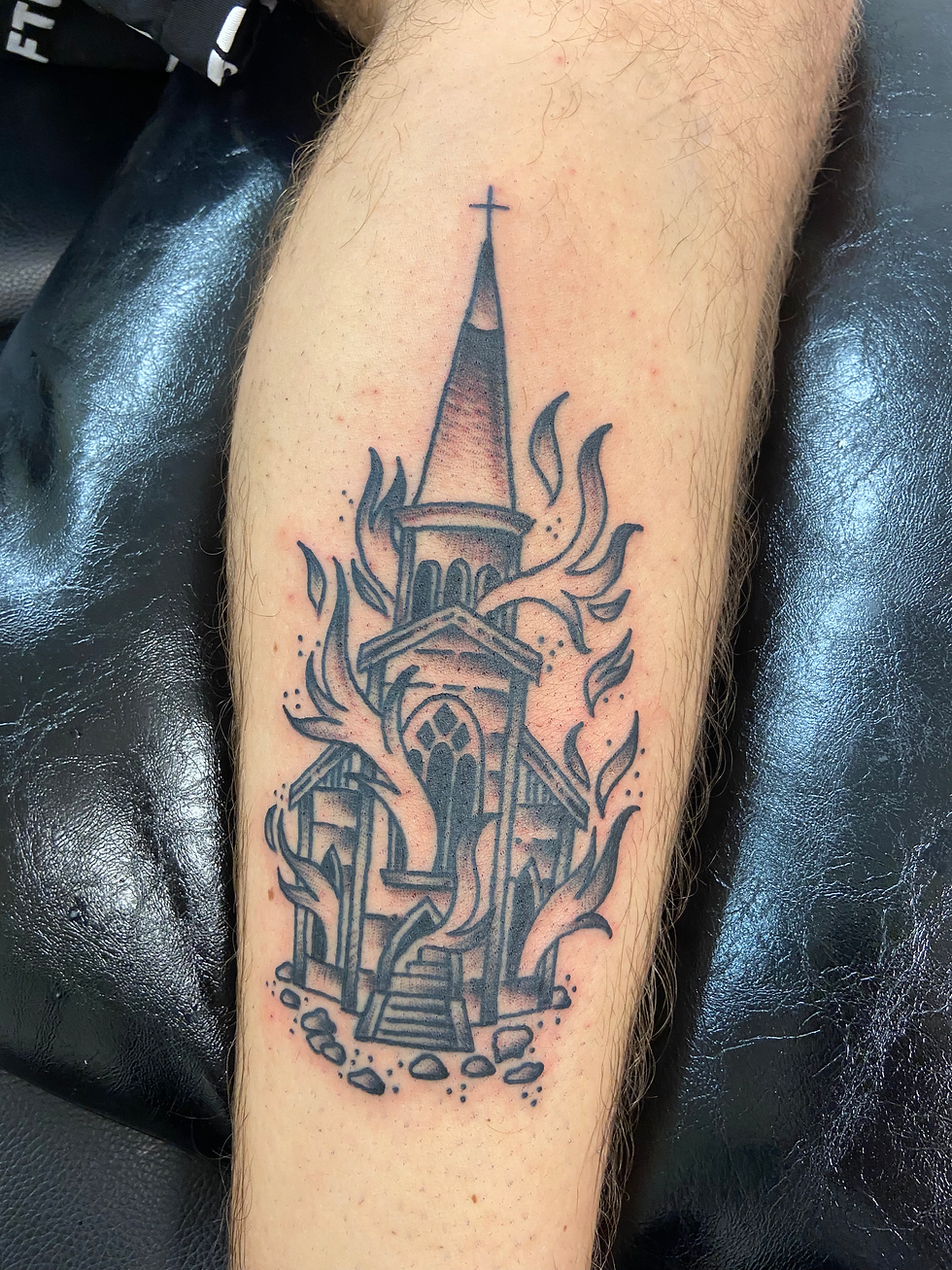
The burning church/chapel, this one speaks for itself. Like the spider web tattoo, the burning church motif has somewhat lost its original meaning over time, it has become an aesthetic image to most people. I feel that this image can represent the rebels of the world. People who stand up for what they believe in.

Still one of my favourite tattoos, the subject matter of this tattoo is not traditional in the slightest. However the style, use of line weights, shading style and colours scream 'trad' tattoo.
On the other hand, traditional tattoos were full of controversial images for the time, from beautiful pin-ups and mermaids with bare chests, to the burning church, so maybe she would fit right in.
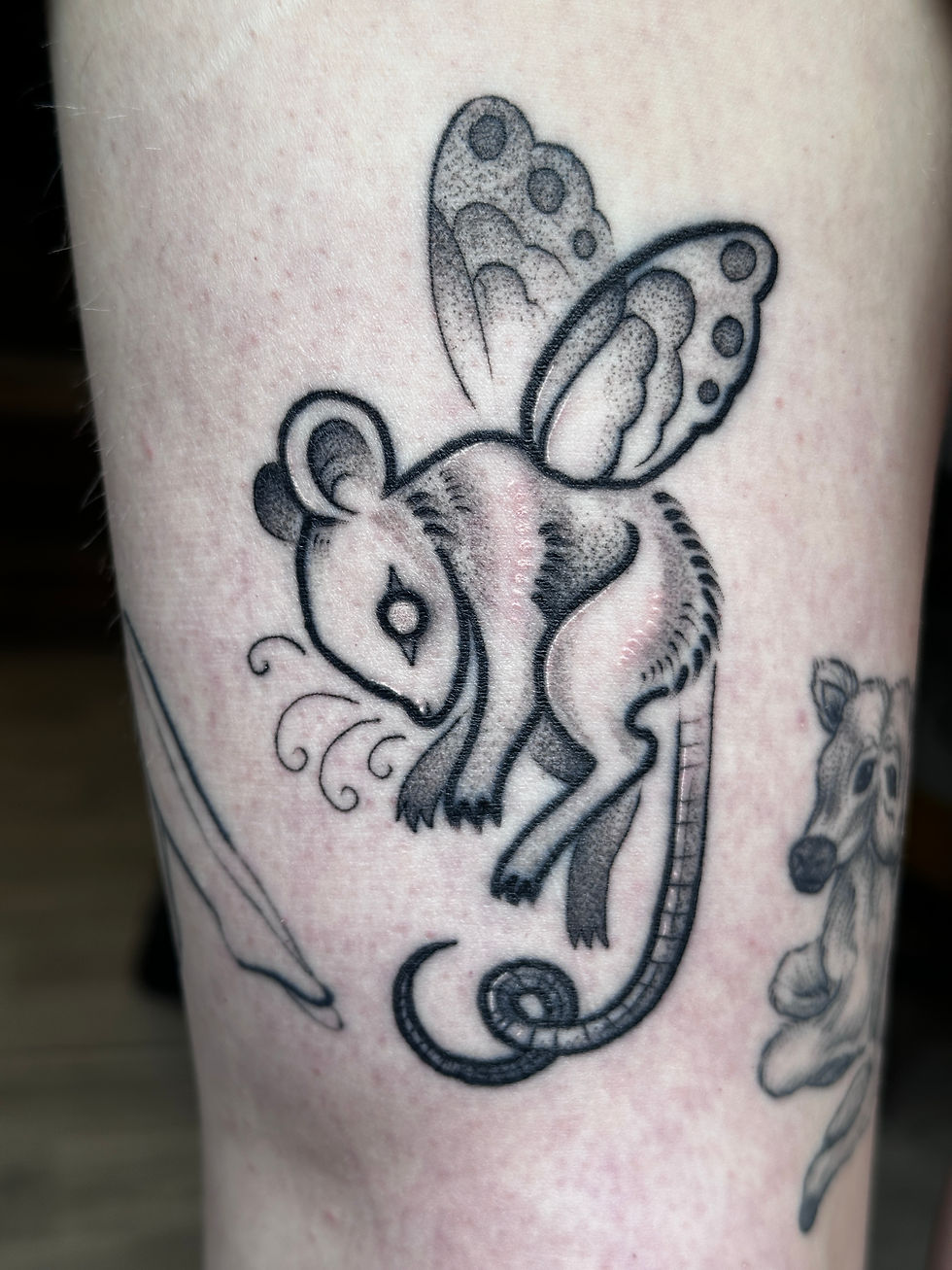
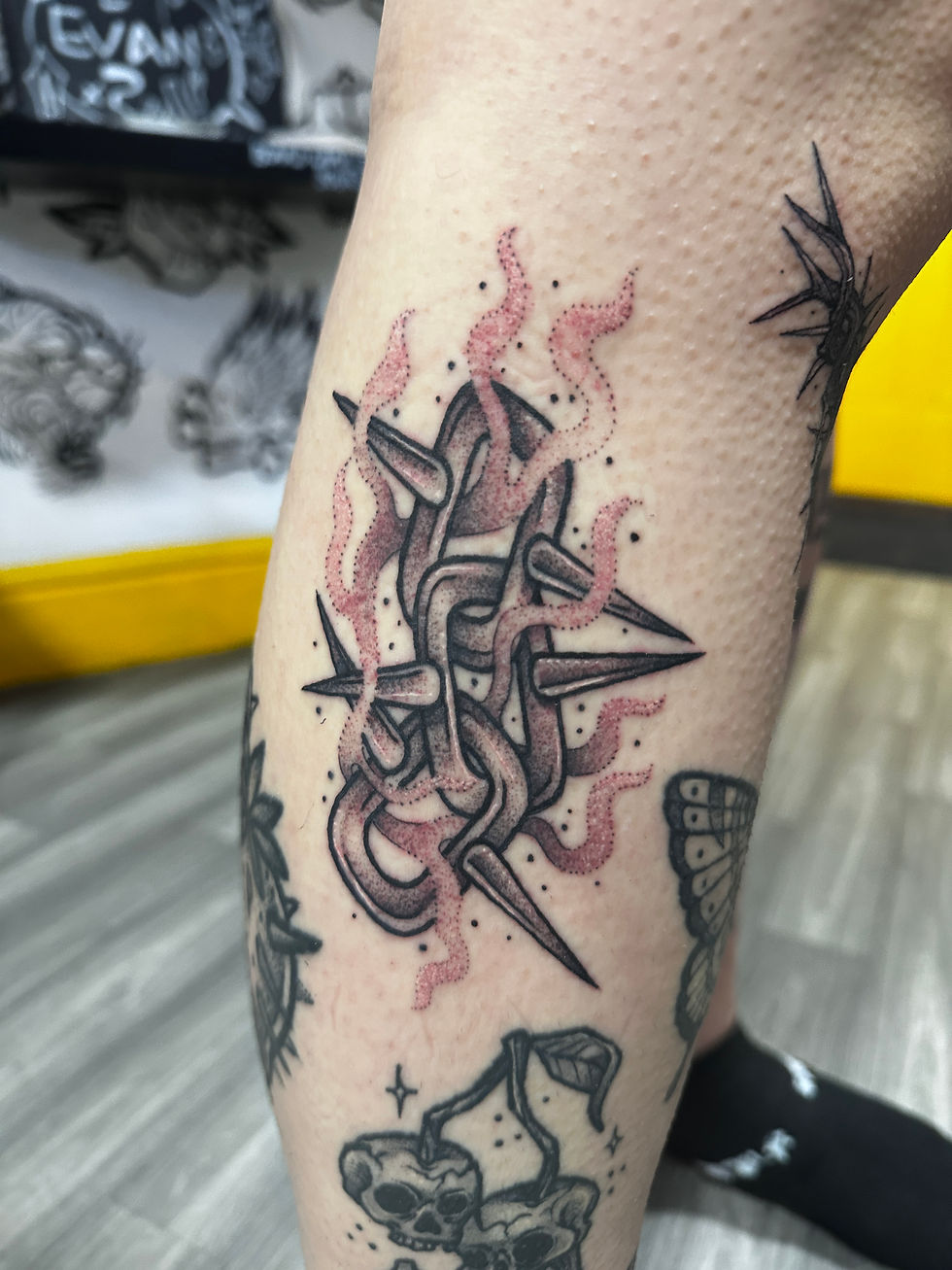
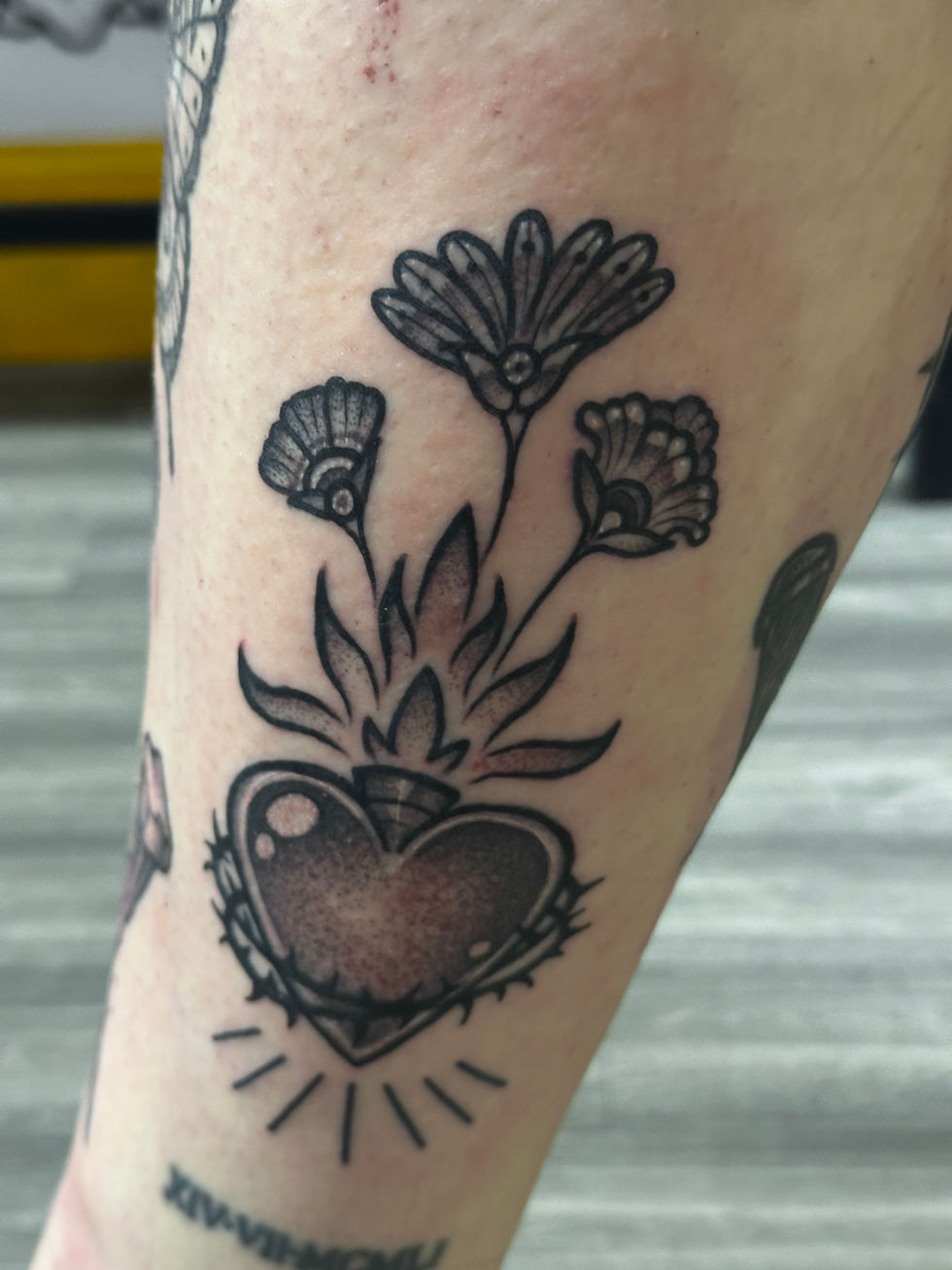
Here we come to my trad style. I have adapted what I like about the traditional tattoo style and made it my own. Bold, thick lines are a must. I like a variation of line weights and I especially love the contrast of very different line weights.
You can also see my favourite type of shading here, it's called pepper or stipple shading and you use a liner instead of the normal 'mag' needle, but it's the same motion as the more traditional 'whip' shading.
Also a big part which sets my 'trad' style apart from traditional tattoos are white highlights. You would have never seen white in a traditional tattoo for the simple reason that white ink just didn't exist. I am constantly thinking about contrast and tones within my tattoos, this means white highlights are a must for me.

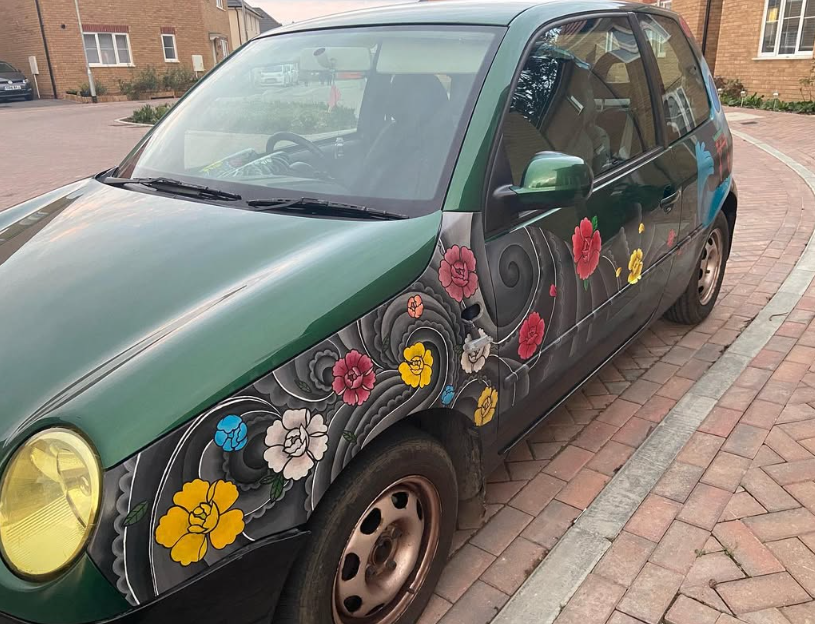
You can see here, another similar tattoo of mine, this time with some Japanese elements. again, you see the bold, think lines compared to very fine lines.
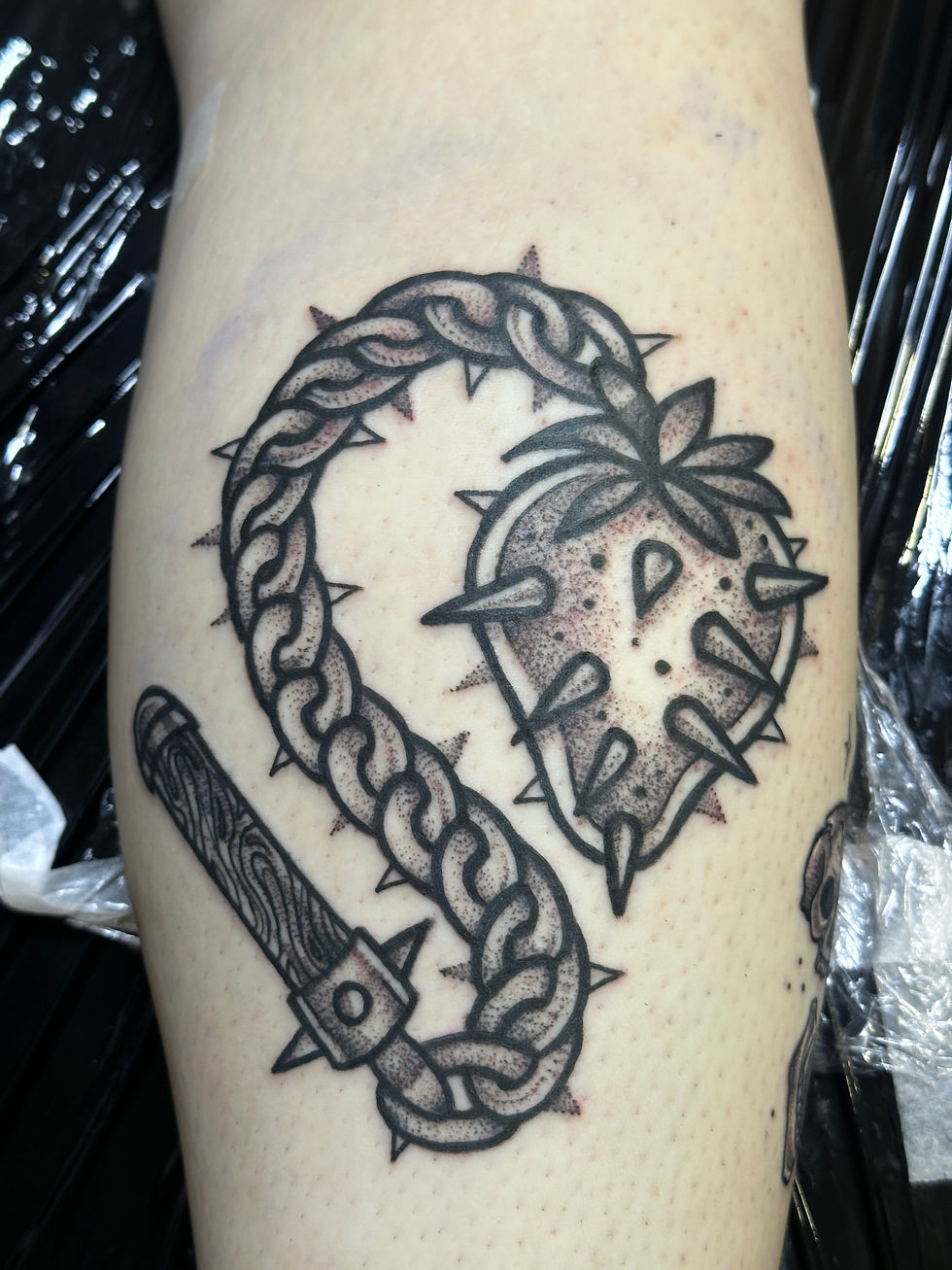
This is another recent favourite. You can see that although the shading is simplified, I still try to make the 3D shape more detailed without leaning too close to Neo-traditional.
Comments